
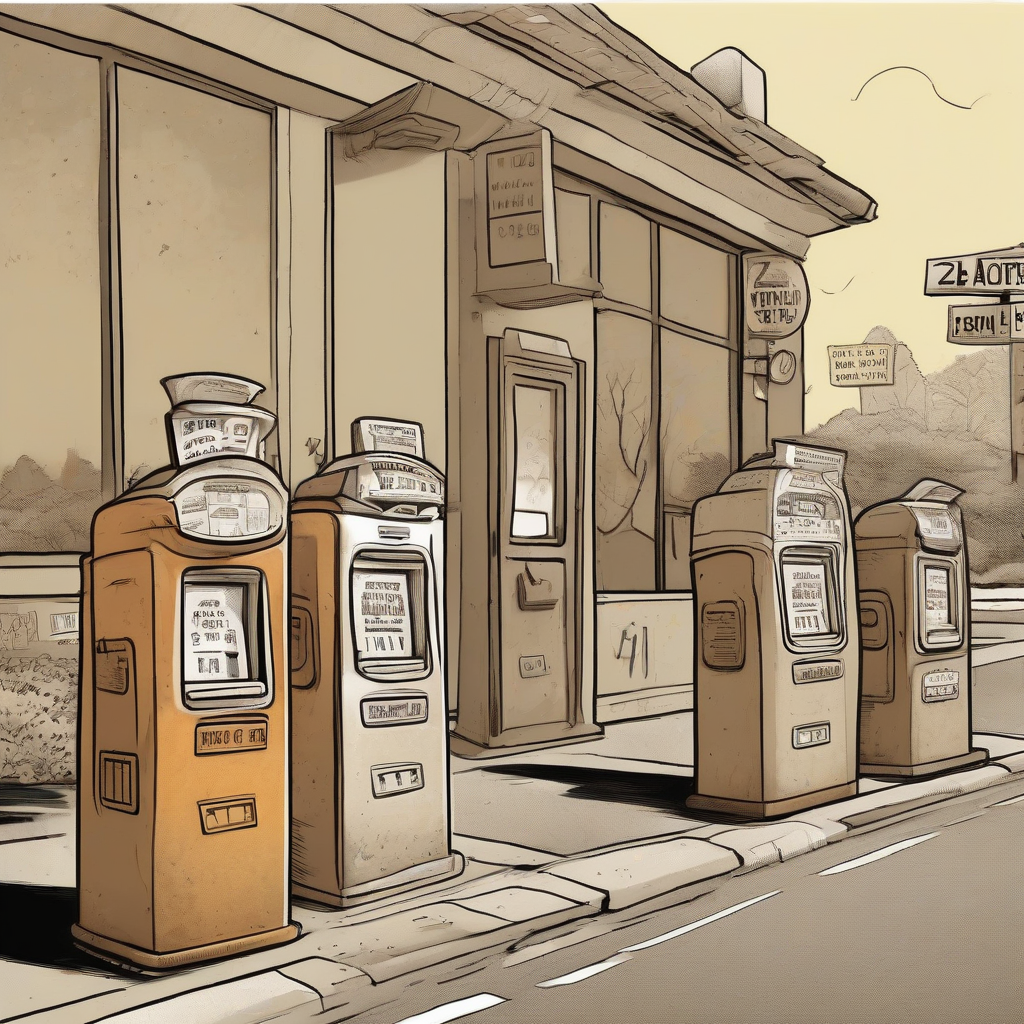
The Zen of 24-Hour Parking Meters
The city's parking meters used to be a civic convenience, not a battle to be won. Remember when you could park for free, but still had to feed the meter every 20 minutes?
I still have the receipt from the last time I fed the parking meter on Guadalupe Street. It was for 25 cents, and the date was August 12, 2012. I must have been running late for a lecture at the University of Texas, because I remember glancing at my watch and thinking, "I've got just enough time to grab a coffee and still make it to class."
The parking meter was one of those old-fashioned ones with a coin slot and a dial that you had to turn to add time. It was a bit of a hassle, but it was also kind of fun. You'd insert your quarter, turn the dial, and feel a sense of accomplishment as you watched the time tick away.
But those days are behind us now. The city has replaced all the old parking meters with automated ones that take credit cards and have a screen that displays the time remaining. It's a lot more convenient, but it's also kind of soulless.
I was at the parking garage on 5th Street the other day, and I saw a sign that said, "Parking Meters Now Accept Credit Cards." I thought to myself, "What's the point of that? Don't people have enough to worry about without having to worry about feeding a parking meter every 20 minutes?" But then I realized that the sign was just a reminder that the city is still trying to make parking as convenient as possible, even if it means sacrificing a little bit of character.
The new parking meters are also a lot more expensive than the old ones. I remember when you could park for free on the street, but still had to feed the meter every 20 minutes. It was a bit of a hassle, but it was also kind of fun. You'd insert your quarter, turn the dial, and feel a sense of accomplishment as you watched the time tick away.
But now, the parking meters are a battle to be won. You have to feed them every 20 minutes, and if you're late, you'll get a ticket. It's a lot more stressful than it used to be, and it's also a lot more expensive.
I'm not sure what the solution is, but I do know that the city needs to find a way to make parking more convenient and less stressful. Maybe they could install more parking meters, or maybe they could just make the ones they have more efficient. Whatever the solution is, it needs to be one that balances the needs of drivers with the needs of the city.
As I was walking away from the parking garage, I saw a sign that said, "Parking Meters Now Accept Credit Cards." I thought to myself, "That's not the solution." The solution is to make parking more convenient and less stressful, not to just make it more expensive. But I guess that's just the old way of thinking.
More from Things We Lost

Condos are Replacing the Contagious Chaos of Red River Street
The city's soul is being sold to soulless investors, one condo at a time. Remember when Red River Street was a place to get weird, not a place to get a sweet deal on a one-bedroom apartment?
The Unmitigated Disaster that is South Congress Avenue's Transformation
The once-thriving hub of Austin's music scene has been reduced to a soulless strip of overpriced boutiques and mediocre restaurants. Where's the weird Bordeaux now?

The Great BBQ Apocalypse: A Rant About the End of the Line for the Best BBQ in Town
The line for Franklin Barbecue used to be a badge of honor, not a hostage situation. Now it's a metaphor for the soul-sucking, time-wasting, and wallet-draining experience that is modern Austin.
More on These Topics

The Rise of the $15,000 Parking Garage
The city's parking garage racket has reached new heights, with luxury condos and parking garages sprouting up like weeds. But who's really benefiting from this gold rush?

The Empire of Parking Tickets
How the city's parking ticket empire has become a booming business, with a new revenue stream for bureaucrats and a fresh headache for Austin drivers.

The Great Red River Street Rebranding Scam
The city's most iconic street is being erased, one boutique at a time. But who's really behind the 'revitalization' of Red River Street?