
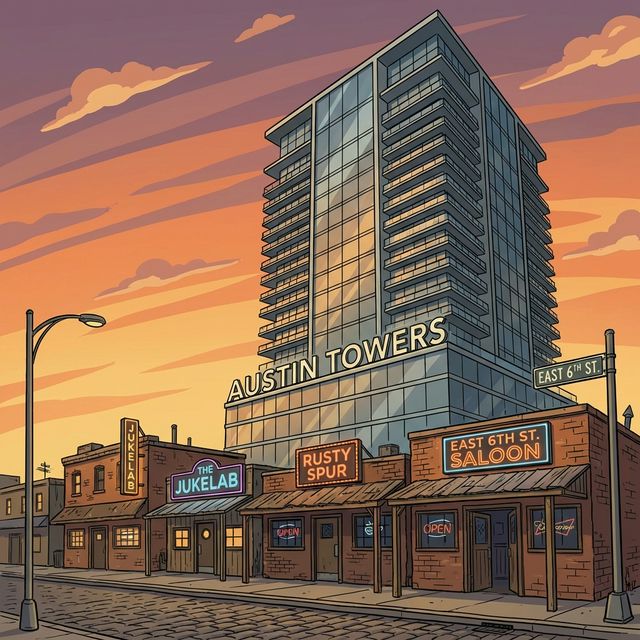
The East Sixth Glass Tower Invasion
The glass towers crossed I-35 and nobody even pretended to be surprised.
"I-35 used to be a wall. Now it's just a speed bump between one set of condos and the next."
For fifty years, I-35 was the line. Not officially — officially, Austin was one city, indivisible, with justice and breakfast tacos for all. But everyone who lived here knew. West of 35 was Austin. East of 35 was the Austin that Austin didn't put on the postcards.
East Austin was Black and Brown and working-class and vibrant in ways that didn't require a James Beard nomination to validate. It had its own economy, its own culture, its own gravity. It also had, thanks to decades of redlining and deliberate neglect, lower property values. And in Austin, low property values are not a social condition. They're a starting gun.
The glass towers heard it.
The Creep
It didn't happen overnight, though it feels like it did. First came the coffee shops — always the coffee shops — around 2010, serving $5 pourovers in buildings that used to be auto body shops. Then came the restaurants, then the boutiques, then the "mixed-use developments" that mixed luxury apartments with ground-floor retail spaces that would sit empty for two years before becoming a pilates studio.
But the towers are different. The towers are a statement. A coffee shop says "we think this neighborhood is interesting." A forty-story glass tower says "we think this neighborhood is finished."
Stand at the corner of East 6th and Brushy and look west toward downtown. Then turn around and look east. It's the same skyline now. The same reflective glass, the same balconies where nobody sits, the same architectural language that says "investment property" in every language except the one spoken by the people who used to live here.
Here's what crossed I-35 along with the towers:
- Rents that tripled in under a decade, pushing out the families, the artists, the tiendas, and the churches that anchored the neighborhood for generations
- A naming convention where every new building is called something like "Eastline" or "Corazon" or "Foundry" — borrowing just enough cultural signifier to be insulting without being actionable
- Traffic patterns designed by people who apparently believe that adding 2,000 residents to a two-lane street is a problem that solves itself
The I-35 Question
The TxDOT rebuild of I-35 was supposed to "reconnect" east and west Austin. In practice, it reconnected them the way a straw reconnects a milkshake to your mouth: the flow only goes one direction. Capital flowed east. Displacement flowed further east. The cap parks they're building over the highway will be lovely, and they'll face condos on both sides, and the developers will use the word "bridge" a lot in their marketing materials, and nobody will laugh even though they should.
The Domain at least had the decency to be built on empty land. Rainey Street was a few blocks of bars. East Austin was a community. It had history that predated the towers by a century. It had Liberty Lunch-level cultural significance spread across an entire quadrant of the city. And it's being replaced by glass boxes with amenity decks.
"I-35 used to be a wall. Now it's just a speed bump between one set of condos and the next."
The towers don't care about context. They don't care about history. They care about floor-to-ceiling windows and proximity to downtown and the kind of "walkability score" that real estate apps use to justify a $2,400 studio. They are machines for extracting wealth from geography, and East Austin's geography just came due.
You can still find the old East Side if you know where to look. But you have to look between the cranes. And you have to look fast.
More from Condos of Shame
The Great Red River Street Rebranding Scam
The city's most iconic street is being erased, one boutique at a time. But who's really behind the 'revitalization' of Red River Street?
The Rise of the $15,000 Parking Garage
The city's parking garage racket has reached new heights, with luxury condos and parking garages sprouting up like weeds. But who's really benefiting from this gold rush?
The Empire of Parking Tickets
How the city's parking ticket empire has become a booming business, with a new revenue stream for bureaucrats and a fresh headache for Austin drivers.
More on These Topics
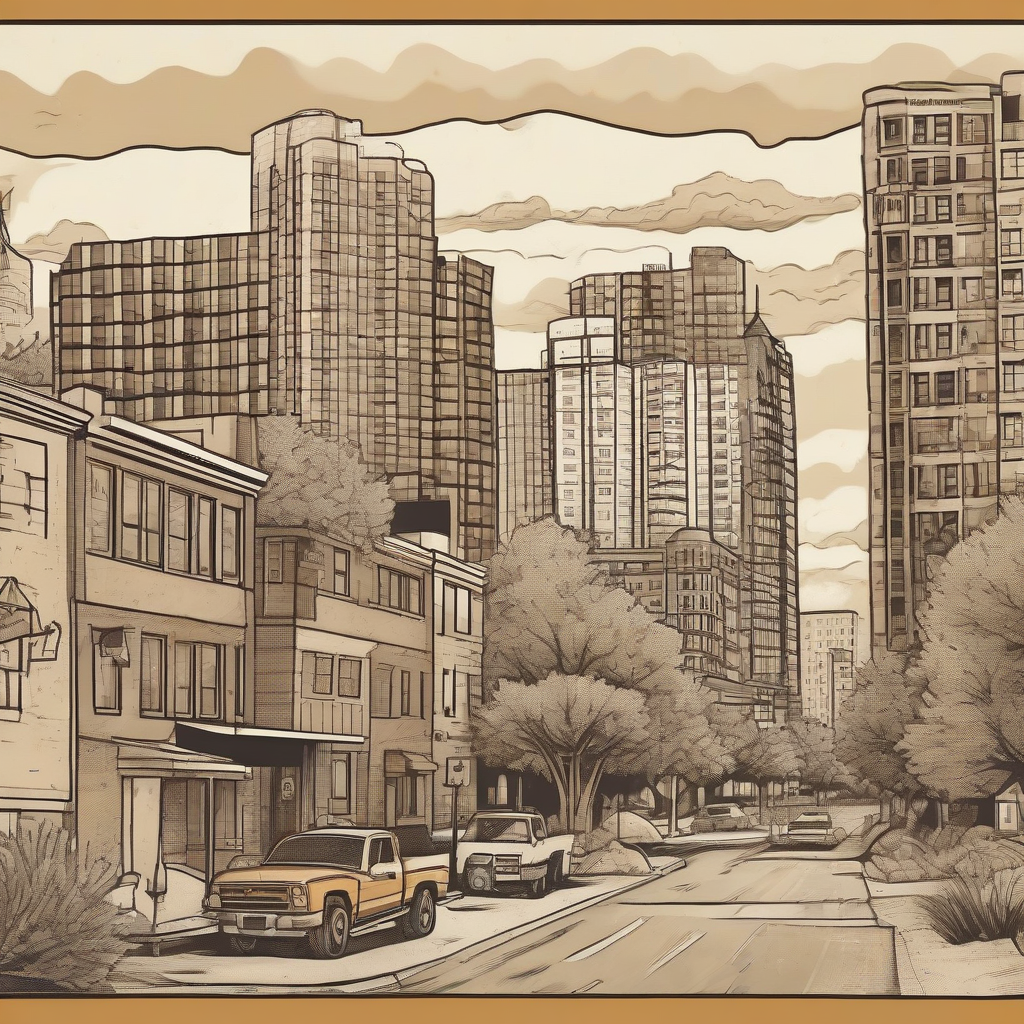
Condos are Replacing the Contagious Chaos of Red River Street
The city's soul is being sold to soulless investors, one condo at a time. Remember when Red River Street was a place to get weird, not a place to get a sweet deal on a one-bedroom apartment?
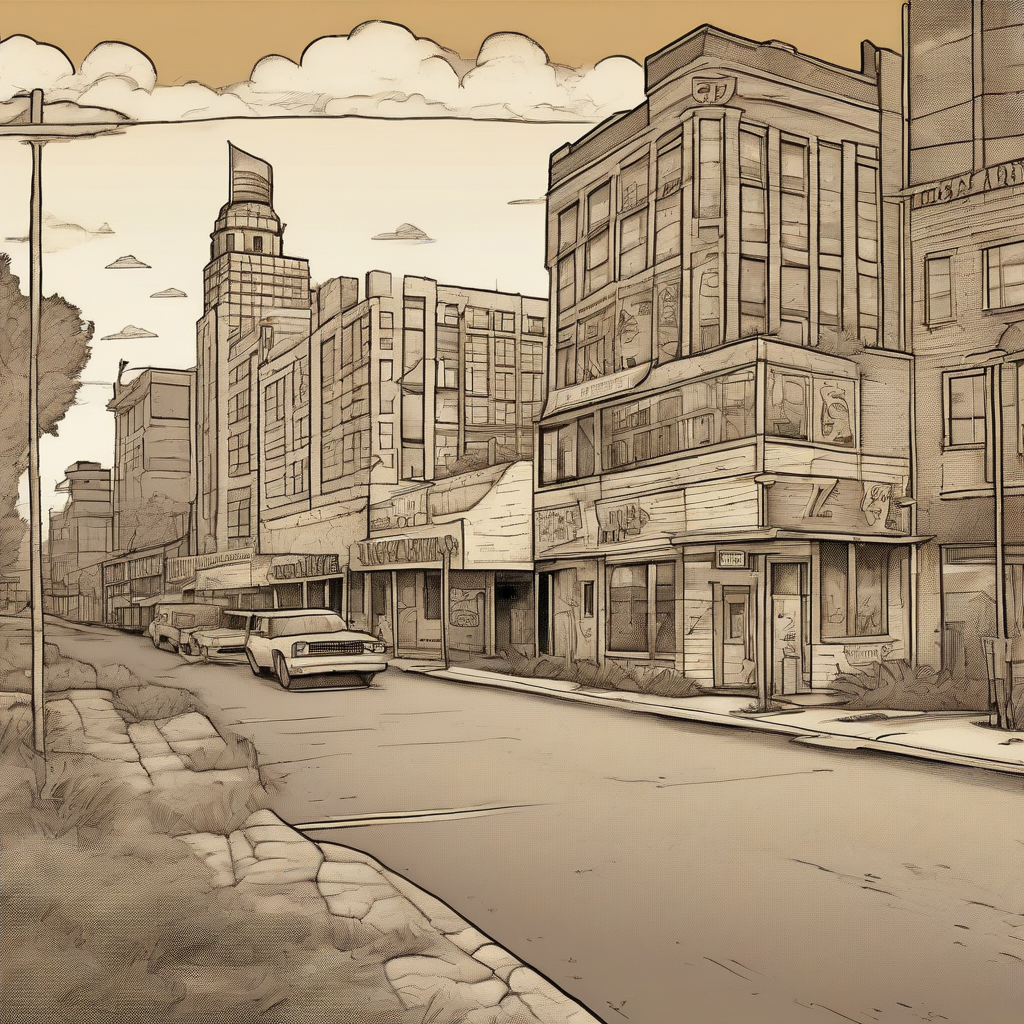
The Unmitigated Disaster that is South Congress Avenue's Transformation
The once-thriving hub of Austin's music scene has been reduced to a soulless strip of overpriced boutiques and mediocre restaurants. Where's the weird Bordeaux now?
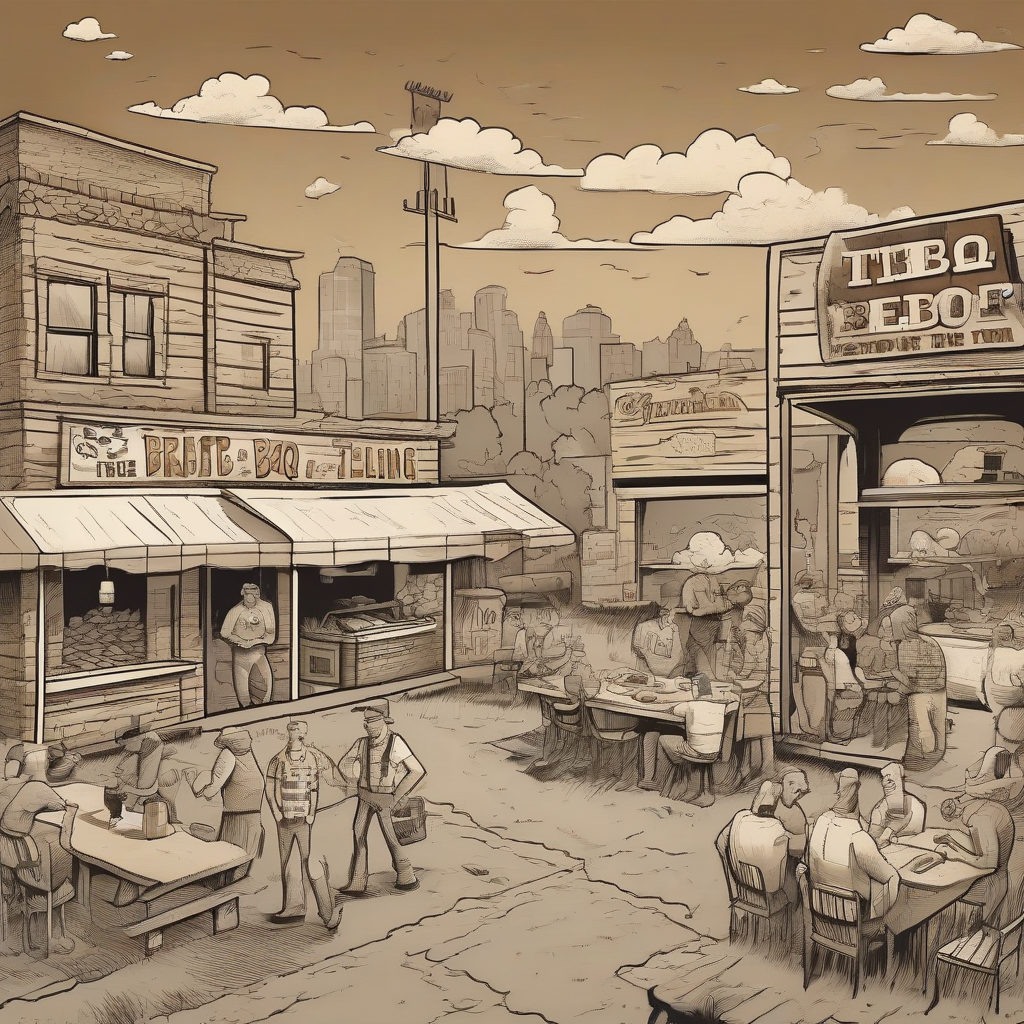
The Great BBQ Apocalypse: A Rant About the End of the Line for the Best BBQ in Town
The line for Franklin Barbecue used to be a badge of honor, not a hostage situation. Now it's a metaphor for the soul-sucking, time-wasting, and wallet-draining experience that is modern Austin.