
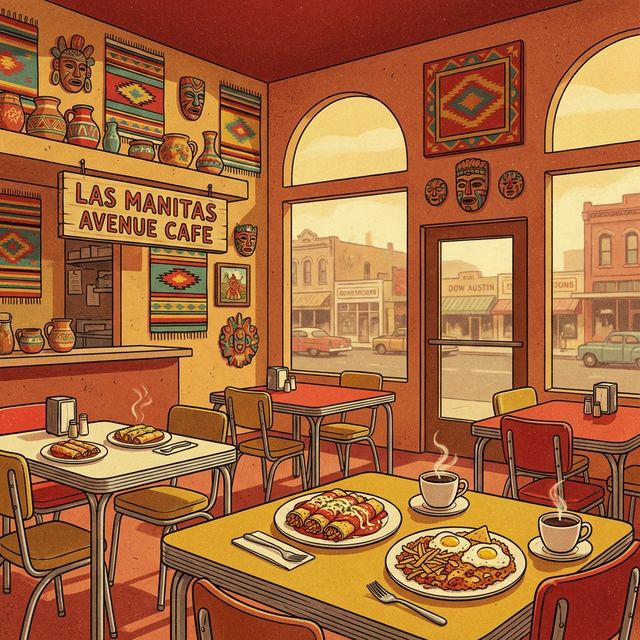
Las Manitas Avenue Cafe: The Counter Where Austin Used to Sit
They closed in 2008. Congress Avenue has never fully recovered. Neither have we.
"Las Manitas didn't have a Yelp strategy. It had migas and the truth."
If you want to understand what Austin lost — not in the abstract, not in the "things change" hand-wave that people use to excuse the inexcusable — go stand at 211 Congress Avenue and look at what's there now. Then close your eyes and try to remember what it smelled like when Las Manitas Avenue Cafe was open, when the migas were on, when the coffee was bottomless and every stool at that counter had a story sitting on it.
Las Manitas didn't have a Yelp strategy. It had migas and the truth.
The cafe opened in 1981, run by Lidia and Cynthia Perez, and for twenty-seven years it was the place where Austin ate breakfast. Not "brunch" — breakfast. There's a difference. Brunch is a $22 plate with a sprig of something and a mimosa. Breakfast is migas, refried beans, tortillas made that morning, and coffee that tasted like coffee, not like a thesis statement on single-origin processing.
Las Manitas was where state legislators ate next to construction workers. Where musicians recovering from last night sat next to lawyers preparing for this morning. Where UT professors and city council members and the woman who ran the laundromat down the street all shared the same counter and the same salsa and nobody thought this was unusual because it wasn't. It was just Austin.
What made Las Manitas irreplaceable:
- The food was extraordinary and cost almost nothing. A full breakfast plate ran you maybe six dollars. The migas were a religious experience. The salsa was the kind of thing that, once you'd had it, made all other salsa feel like it was trying too hard. It wasn't trying at all. It was just right.
- The walls were covered in art — folk art, local art, political art — that made the cafe feel like a living gallery. Nothing was curated. Everything was intentional. The Perez sisters had taste that no amount of interior design consulting could replicate, because it wasn't design. It was culture.
- It was on Congress Avenue, which meant it was in the heart of the city in a way that mattered. You could walk from the Capitol to Las Manitas in five minutes. This was a place where the political and the personal intersected over a plate of three-dollar tacos.
They closed in 2008, pushed out by rising rents and a developer who wanted the lot for a hotel. The hotel — a JW Marriott — opened in 2015. It has 1,012 rooms, a rooftop pool, and a restaurant where breakfast costs more than a lot of people's hourly wage. It does not have migas. It does not have a counter where the governor might sit next to a bus driver. It has a lobby. Lobbies are not the same as counters. This should be obvious, but in modern Austin, very little is.
Lidia Perez once said the cafe was "a place where everyone felt they belonged." Read that sentence again and think about how many places in Austin still make you feel that way. Take your time. We'll wait.
The loss of Las Manitas wasn't just about food. It was about the physical space where a city's classes mixed. Where the myth of Austin as a democratic, unpretentious, everyone's-welcome kind of town was actually, tangibly true. When that space became a Marriott, the myth didn't die — myths don't die, they just get hollowed out — but it lost the one address where you could walk in and prove it.
We think about Las Manitas every time we walk past the South Congress condos. We think about it every time someone says Austin is "still weird." We think about it when we see what replaced it and understand that the city made a choice — comfort for tourists over community for locals — and has been making that same choice, on block after block, ever since.
The counter's gone. The migas are gone. The truth is still out there, but it doesn't have a fixed address anymore. It's wandering, like the rest of us, looking for a seat.
More from Lost Venues & Dive Bars
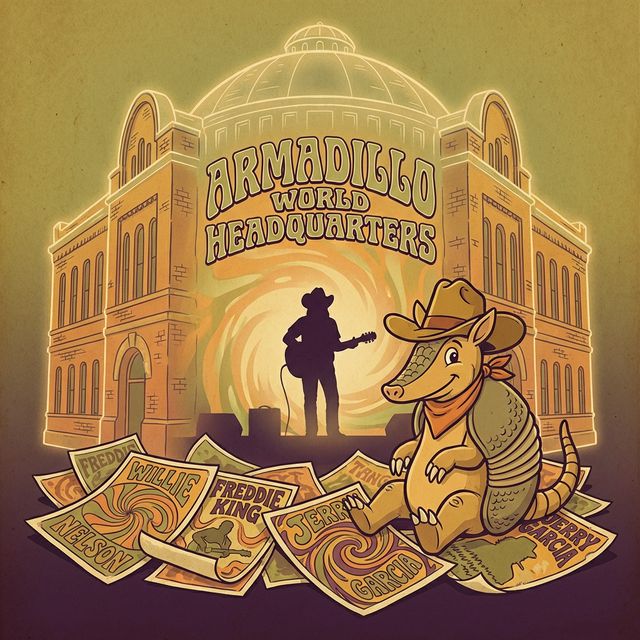
The Armadillo World Headquarters: Where Austin Became Austin
Before it was a parking lot and then a high-rise, it was the room where rednecks and hippies decided to get along.
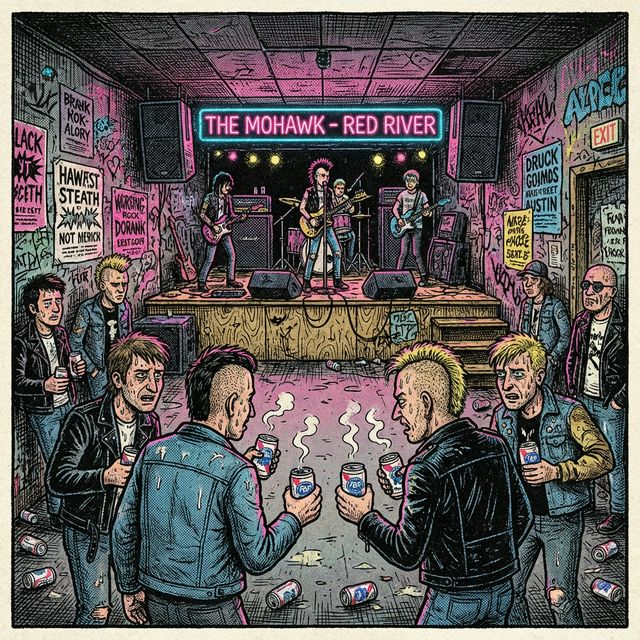
Emo's on Sixth: Before the Move, Before the Mourn
The original Emo's wasn't a venue. It was a bruise you were proud of.
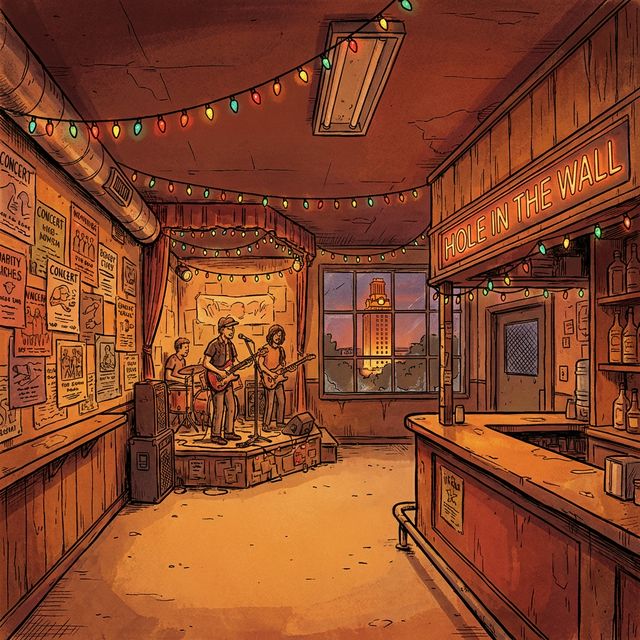
Hole in the Wall: Still Here, Still Holy
It's survived everything Austin has thrown at it, which at this point is basically a siege.