
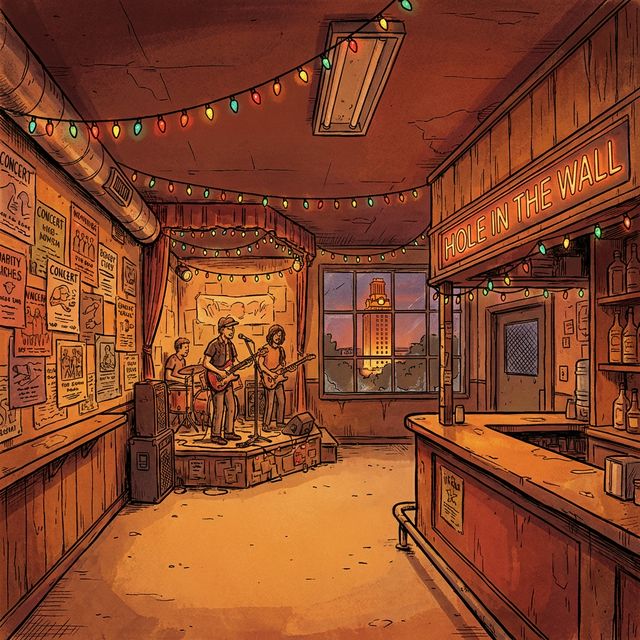
Hole in the Wall: Still Here, Still Holy
It's survived everything Austin has thrown at it, which at this point is basically a siege.
"The Hole in the Wall doesn't need a renovation. It needs a monument."
Let's get the technicality out of the way: Hole in the Wall is not, strictly speaking, a lost venue. It's still there, at 2538 Guadalupe, on the Drag, across from the UT campus, same as it has been since 1974. But in a city that has bulldozed, condofied, and "activated" nearly every square foot of character it ever had, the fact that this bar still exists feels less like survival and more like spite. Beautiful, necessary spite.
The Hole in the Wall doesn't need a renovation. It needs a monument.
This is the bar where Stevie Ray Vaughan played early sets. Where Doug Sahm held court. Where Nanci Griffith and Lucinda Williams and Townes Van Zandt all stood on a stage roughly the size of a parking space and played music that would outlive every luxury apartment tower visible from the front door. The room is small. The ceiling is low. The floor is the kind of sticky that archaeologists will one day study.
It's also the bar where, on any given Wednesday night in 2025, you can see a band you've never heard of play a set that makes you remember why you cared about live music in the first place. That hasn't changed. That's the miracle.
Here's what makes the Hole in the Wall sacred:
- It has never tried to be anything other than what it is. There is no rebrand. There is no "concept." The concept is: here is a small room, here are some speakers, here is a bar. Figure it out.
- The walls are covered in flyers and stickers and band posters layered so deep that removing them would probably compromise the structural integrity of the building. This is not a design choice. This is history doing what history does when you leave it alone.
- A Lone Star at the Hole in the Wall still costs what a beer should cost. Not what some Rainey Street bar charges you for a domestic in a can with a cucumber garnish nobody asked for.
The Drag itself has changed beyond recognition. Half the storefronts that defined the strip for UT students in the '80s and '90s are gone, replaced by chain restaurants and mixed-use developments that look like they were designed by the same algorithm. But Hole in the Wall holds the line. It is the last outpost of a Guadalupe Street that used to mean something more than foot traffic for a Chipotle.
There have been threats over the years. Rent increases. Redevelopment rumors. Every time, the Austin music community rallies, because everyone knows — even the people who haven't been in years — that losing the Hole in the Wall would be the kind of loss you don't measure in square footage. You measure it in what's left of a city's soul.
We've written eulogies for Liberty Lunch. We've mourned Emo's on 6th. We watched the Armadillo become a memory before most of us were old enough to drink. But the Hole in the Wall is still here, and every night it's open is a small, stubborn, beautiful act of defiance against a city that has done its level best to sand down every rough edge it ever had.
Go see a show. Bring cash for the door. Don't park on the Drag — you'll get towed, and you'll deserve it. Order a Lone Star. Stand close to the stage. Remember what this city sounds like when it isn't trying to sell you something.
More from Lost Venues & Dive Bars
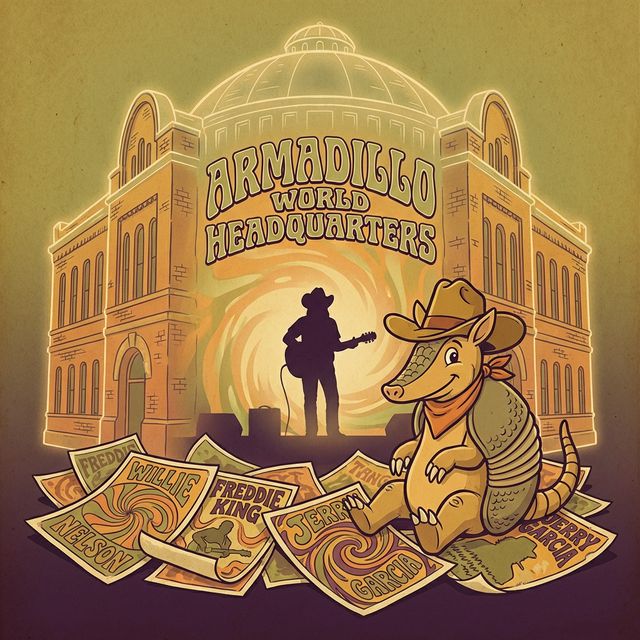
The Armadillo World Headquarters: Where Austin Became Austin
Before it was a parking lot and then a high-rise, it was the room where rednecks and hippies decided to get along.
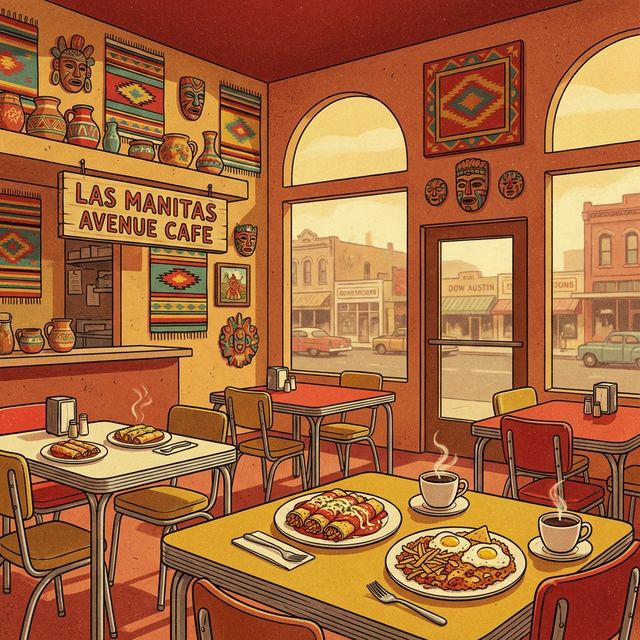
Las Manitas Avenue Cafe: The Counter Where Austin Used to Sit
They closed in 2008. Congress Avenue has never fully recovered. Neither have we.
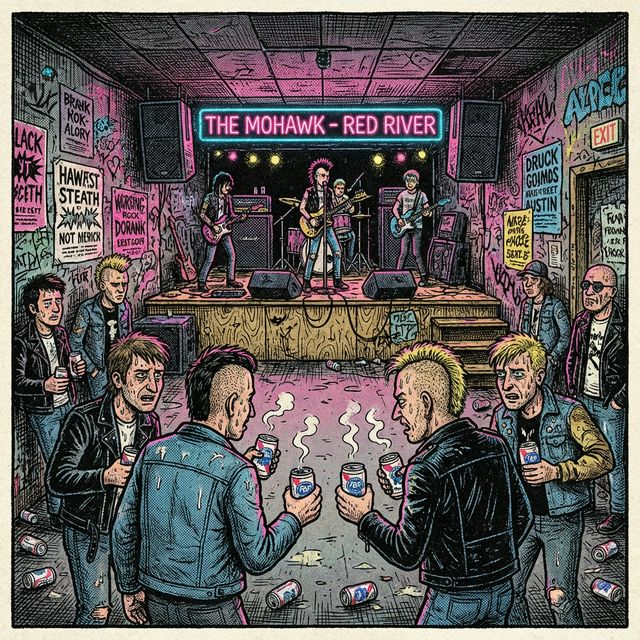
Emo's on Sixth: Before the Move, Before the Mourn
The original Emo's wasn't a venue. It was a bruise you were proud of.